Volume 22, Issue 4 (December 2025)
Abstract
(20226 Views) |
Full-Text (PDF)
(5778 Downloads)
|
Graphical Abstract
|
Reseach Highlights
Graphical Abstract:

Reseach Highlights:
- This study demonstrates the potential of plasmonic nanostructures (200 nm Aluminum nano-sphere) to greatly enhance the efficiency of ultra-thin film CIGS solar cells by up to 26.14%.
- The research explores the impact of material type, nanostructure size, surface occupancy, and plasmonic nanostructure position on the performance of CIGS solar cells through optical and electrical simulations.
- The use of localized surface plasmon resonance and near-field distribution enhances carrier generation, reduces recombination, and improves carrier separation, thereby increasing light absorption in the active layer.
Abstract
(12500 Views) |
Full-Text (PDF)
(4307 Downloads)
|
Graphical Abstract
|
Reseach Highlights
Graphical Abstract:

Reseach Highlights:
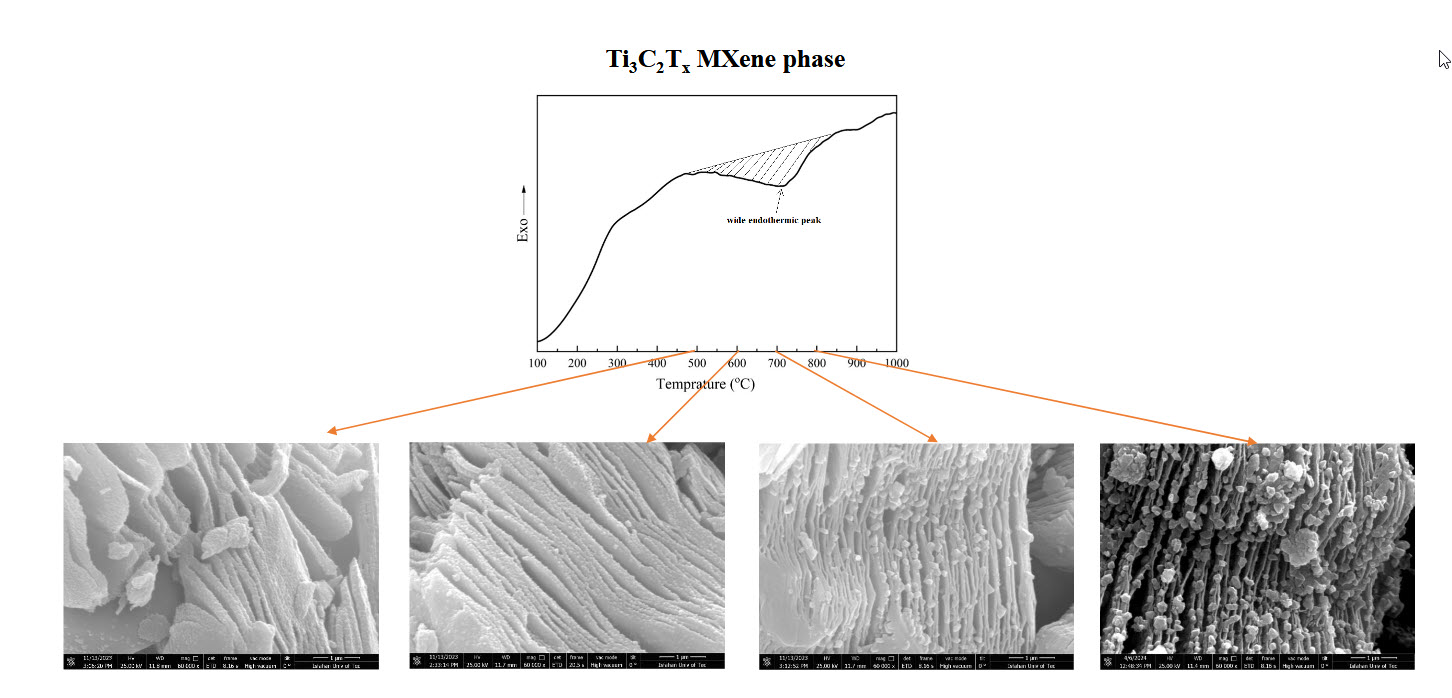
1- MXene-based Ti3C2/TiO2 composites successfully synthesis during annealing.
2- The phase transformation in Ti3C2Tx MXene during annealing has been investigated.
3- The electromagnetic characteristics of MXene-based Ti3C2/TiO2 has been studied.
Abstract
(16262 Views) |
Full-Text (PDF)
(4585 Downloads)
|
Graphical Abstract
|
Reseach Highlights
Graphical Abstract:

Reseach Highlights:
1. ZnO, Sn- and Al-doped thin films were synthesized by spray pyrolysis.
2. Analyses revealed doping effects on ZnO structure, optical and surface traits.
3. Bandgap decreased from 3.254 eV (ZnO) to 3.142 eV (Sn) and 3.152 eV (Al).
4. Pure ZnO degraded 85% of methylene blue, showing the best photocatalysis.
5. Langmuir adsorption showed Sn-doped ZnO had highest capacity of 1.422 mg/g.
Abstract
(16618 Views) |
Full-Text (PDF)
(4341 Downloads)
|
Graphical Abstract
|
Reseach Highlights
Graphical Abstract:

Reseach Highlights:
Highlights
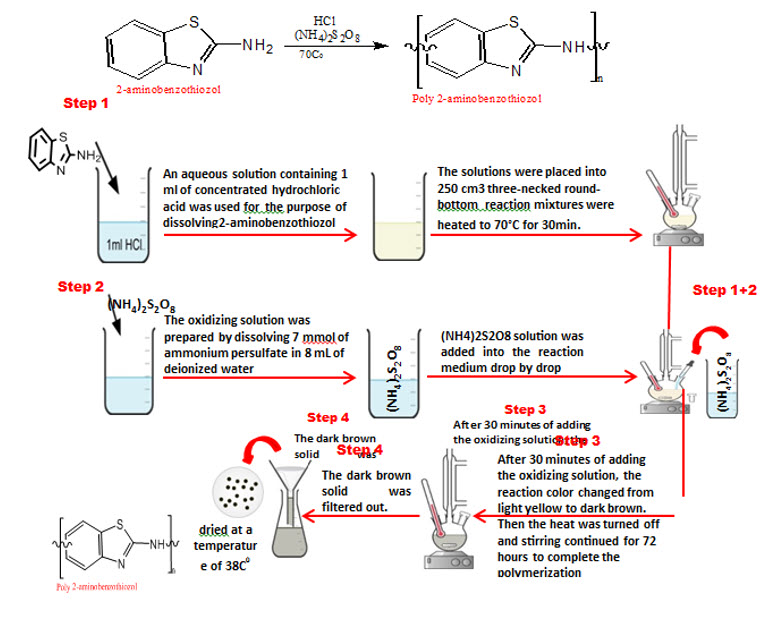
- enhancement of thermal stability for poly 2-aminobenzothiazole:MWCNTs composite
- The results suggest that prepared composite can be applied promising candidate for many electrical and optical applications.
- Nanocomposite thin films exhibiting a significant enhancement by a factor of 2.5x10⁴ times as a results of doping the pure polymer by 1% wt MWCNTs.
Abstract
(11743 Views) |
Full-Text (PDF)
(3824 Downloads)
|
Graphical Abstract
|
Reseach Highlights
Graphical Abstract:

Reseach Highlights:
- Green synthesis of silver nanoparticles using curcumin as an anticancer compound
- Effective size of nanoparticles to cross the blood-brain barrier
- Anticancer properties of synthesized nanoparticles
Abstract
(12290 Views) |
Full-Text (PDF)
(4092 Downloads)
|
Graphical Abstract
|
Reseach Highlights
Graphical Abstract:

Reseach Highlights:
Highlights:
- Tensile deformation behavior in 1350 aluminum wire was simulated using Crystal Plasticity Finite Element Method (CPFEM).
- A statistically representative volume element (RVE) comprising 1000 grains was adopted to ensure reliable predictions under tensile loading conditions.
- Simulations revealed the development of distinct <111> and <100> fiber textures within the (111) crystallographic plane, consistent with FCC deformation mechanisms.
- The study highlights CPFEM’s capability to accurately predict microstructural evolution, demonstrating its utility for modeling plastic deformation in polycrystalline materials.
Abstract
(11080 Views) |
Full-Text (PDF)
(4625 Downloads)
|
Graphical Abstract
|
Reseach Highlights
Graphical Abstract:

Reseach Highlights:
- First comprehensive study of static and fatigue behavior of Haynes 25 and welds.
- Base metal: 650 MPa yield, 1050 MPa UTS, 57% elongation, fatigue limit 200 MPa.
- Weld zone: 660 MPa yield, 965 MPa UTS, 38.5% elongation, fatigue limit 175 MPa.
- Fatigue cracks initiated at carbides in base metal, at porosity defects in welds.
- Welds retained ~88–90% fatigue strength of base metal in high-cycle fatigue.
Abstract
(13300 Views) |
Full-Text (PDF)
(3946 Downloads)
|
Graphical Abstract
|
Reseach Highlights
Graphical Abstract:

Reseach Highlights:
Highlights
- The spark voltage and stability of PEO process and as a result, spark characteristics change under the type of electrolyte. With increasing spark and stability voltages, the thickness of the coating and the porosity increased from AE to PE due to the intensification of the energy of spark pulses.
- The results of equilibrium of impedance spectra with suitable equivalent circuits revealed that in all three coatings, the major portion of the corrosion resistance of the coating was related to the inner compacted layer, which would enhance the corrosion resistance of the coating by creating a barrier layer against corrosive electrolytes.
- The SE sample had a higher corrosion resistance due to its relatively thick coating, dense structure, and stable phase (Mg2SiO4).
- The tensile strength and elongation diminished from the uncoated to coated samples.
- Both the tensile strength and elongation dropped by changing the electrolyte from AE to PE, while the yield strength was almost similar. The latter could be attributed to the presence of cracks and pores in the brittle ceramic PEO coating as stress concentration regions during deformation, resulting from thermal stress during the coating process and deformation in the elastic stage.
Abstract
(12144 Views) |
Full-Text (PDF)
(4896 Downloads)
|
Graphical Abstract
|
Reseach Highlights
Graphical Abstract:

Reseach Highlights:
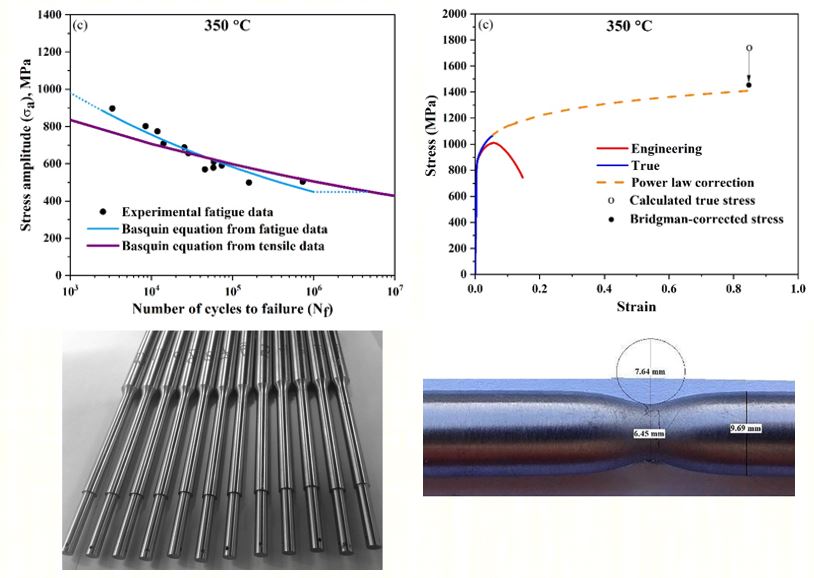
- The fatigue behavior of 4340 steel was estimated using tensile test data
- The Basquin and Coffin-Manson equations were plotted using tensile data
- Corrected true stress and strain at the fracture point were calculated
- The constant b in the Basquin equation was estimated from the b-N curve
- The constant c was calculated by considering the specific transition fatigue life
Abstract
(9424 Views) |
Full-Text (PDF)
(3597 Downloads)
|
Graphical Abstract
|
Reseach Highlights
Graphical Abstract:

Reseach Highlights:
Highlight
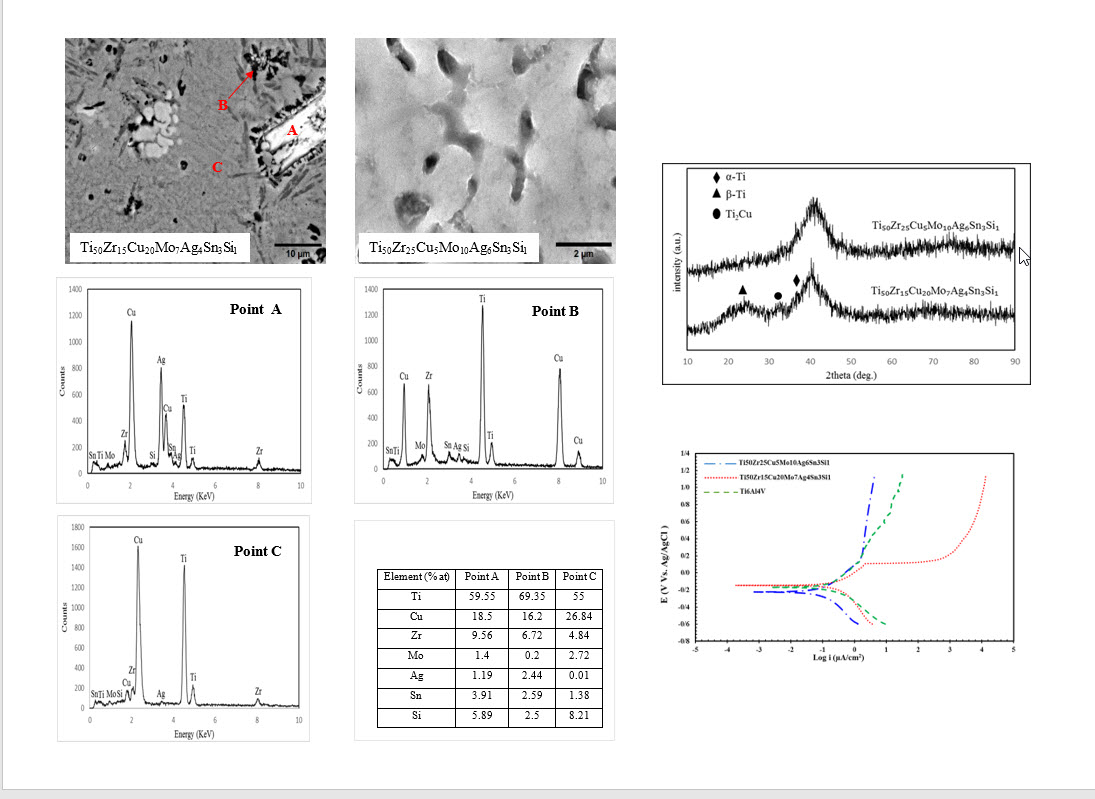
Ti-based metallic glasses where produced with reducing Cu and eliminating toxic and noble metals to enhance corrosion resistance and glass-forming ability.
Reducing Cu and increasing Mo content in Ti-based alloys effectively suppressed the formation of Ti₂Cu intermetallic and crystalline phases.
Formation of a stable passive film on Ti₅₀Zr₂₅Cu₅Mo₁₀Ag₆Sn₃Si₁ alloy provided better corrosion resistance.
Abstract
(11138 Views) |
Full-Text (PDF)
(3564 Downloads)
|
Graphical Abstract
|
Reseach Highlights
Graphical Abstract:

Reseach Highlights:
Highlights
- The synthesis of biopolymer electrolyte films was accomplished through the solution casting technique.
- The incorporation of Tamarind Seed Polysaccharide (TSP) with various concentrations of Sodium Iodide (NaI).
- X-ray Diffraction (XRD) analysis indicated that this composition 80:20 film exhibited the highest degree of amorphousness and the smallest crystallite dimensions (0.31 nm),
- Fourier Transform Infrared (FTIR) spectroscopy substantiated the occurrence of complexation between TSP and NaI.
- Temperature dependence conductivity indicated that the 80:20 compositions possessed the highest ionic conductivity (1.97x10⁻4 S/cm).
- The lowest activation energy (0.69 eV), consistent with Arrhenius-type behaviour.
- The Tangent loss corroborated these results, demonstrating an optimal relaxation profile for the 80% TSP:20% NaI composition.
- Optical absorption analyses revealed a reduction in the band gap from 3.92 eV (pure TSP) to 2.68 eV.
- Optical band gap confirmed lower energy transitions for the 80:20 film, thereby endorsing its efficient conduction. Urbach energy exhibited the highest value for the 80:20 film, indicating a greater degree of structural disorder.
Abstract
(12866 Views) |
Full-Text (PDF)
(5249 Downloads)
|
Graphical Abstract
|
Reseach Highlights
Graphical Abstract:

Reseach Highlights:
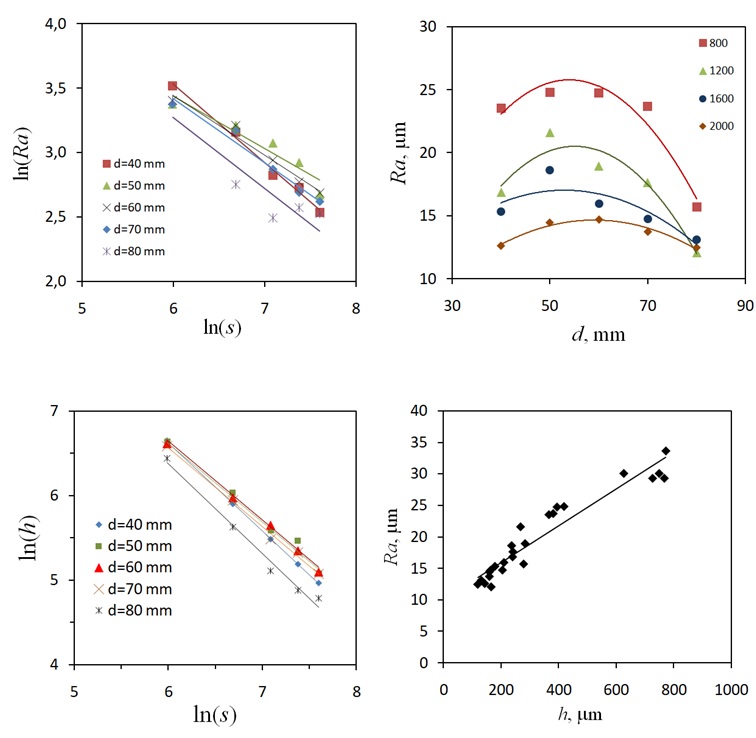
Effect of detonation spray conditions on the surface properties of metal-ceramic (titanium dioxide) coatings is described.
The surface roughness and hydrophobicity can be controlled in the production process by selecting certain values of the technological parameters of the spraying process.
The roughness of the coating surface and the coating thickness depend on the speed of the nozzle passage in accordance with the inverse power law.
The roughness and the contact angle depend on spray distance in accordance with a parabolic law.
Abstract
(11448 Views) |
Full-Text (PDF)
(3967 Downloads)
|
Graphical Abstract
|
Reseach Highlights
Graphical Abstract:

Reseach Highlights:
Highlight:
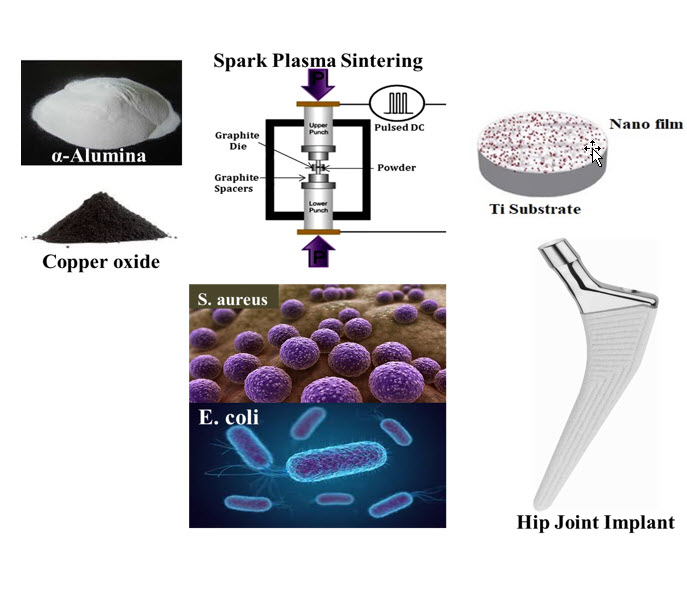
These findings highlight the potential of CuO/Al₂O₃ nanocomposite coatings to function as dual-purpose orthopedic implants by leveraging the antimicrobial and osteogenic properties of CuO morphologies. Evaluate the antimicrobial, bioactivity and in vitro cytotoxicity of the nanocomposite CuO/Al2O3 with two different morphologies of copper oxide, which was made with Spark Plasma Sintering (SPS) process on titanium substrate as an orthopedic implant. This innovation addresses critical challenges in implant technology, paving the way for safer and more effective biomedical solutions.
Export as:
HTML
|
XML
|
RSS