Volume 20, Issue 4 (December 2023)
Abstract
(23013 Views) |
Full-Text (PDF)
(7239 Downloads)
|
Graphical Abstract
|
Reseach Highlights
Graphical Abstract:
Reseach Highlights:
Highlights
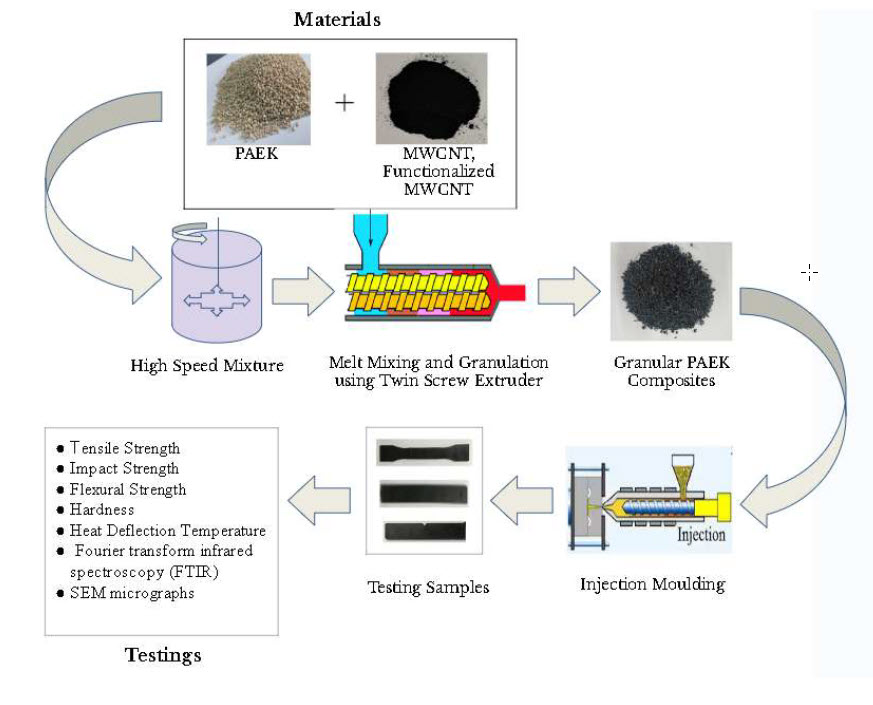
1. Study focuses on performance of high temperature polymer-PAEK based nanocomposites
2. The incorporation of functionalized MWCNT in PAEK matrix enhances the mechanical properties of composites than PAEK/MWCNT composites.
3. Addition of MWCNT and functionalized MWCNT in PAEK resulting in improved mechanical properties such as tensile strength, impact strength, hardness and flexural strength.
4. PAEK nanocomposites exhibit good capabilities for various material applications.
Abstract
(21564 Views) |
Full-Text (PDF)
(7741 Downloads)
|
Graphical Abstract
|
Reseach Highlights
Graphical Abstract:
Reseach Highlights:
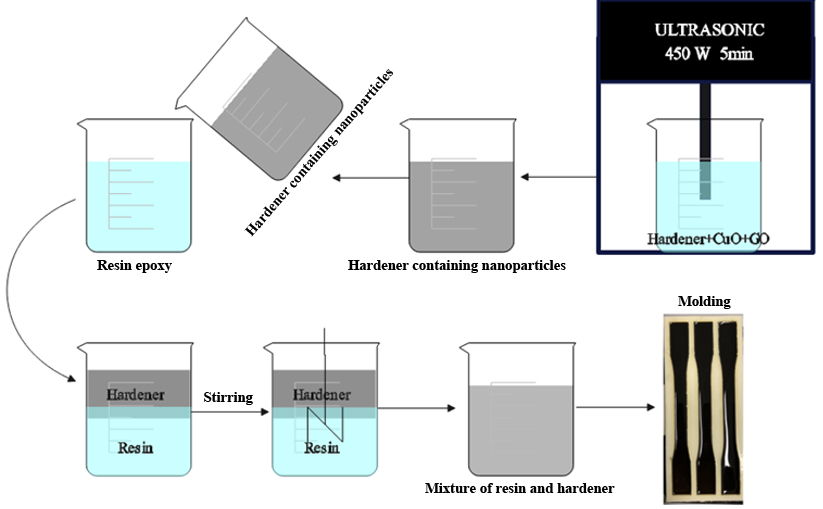
- CuO–GO hybrid was prepared by a sonication-based treatment.
- Epoxy-CuO-GO nanocomposite was fabricated by the molding and drying technique.
- Mechanical properties of the ternary nanocomposite were evaluated.
Abstract
(23733 Views) |
Full-Text (PDF)
(6969 Downloads)
|
Graphical Abstract
|
Reseach Highlights
Graphical Abstract:

Reseach Highlights:
- Porous DCPD/β-TCP scaffolds were successfully fabricated via s setting reaction through the dissolution-precipitation technique.
- The fabrication of macro- and micropore DCPD/β-TCP scaffolds was regulated by exposing porous β-TCP granules to an acidic calcium phosphate solution.
- The properties of porous scaffolds produced were related to the amounts of DCPD crystals.
- The precipitation of DCPD amounts was highly influenced by setting-time reaction and acidic calcium phosphate concentrations.
Abstract
(25901 Views) |
Full-Text (PDF)
(9317 Downloads)
|
Reseach Highlights
Reseach Highlights:
- Effect of composition on the properties of cementitious tile adhesive was investigated.
- The impact of re-dispersible polymer powder, super plasticizer, accelerator on the tensile adhesion strength at different condition were explored.
- The effect of substitution of Portland cement with high alumina cement on the mechanical properties of cementitious tile adhesive was examined.
Abstract
(21203 Views) |
Full-Text (PDF)
(7626 Downloads)
|
Graphical Abstract
|
Reseach Highlights
Graphical Abstract:
Reseach Highlights:
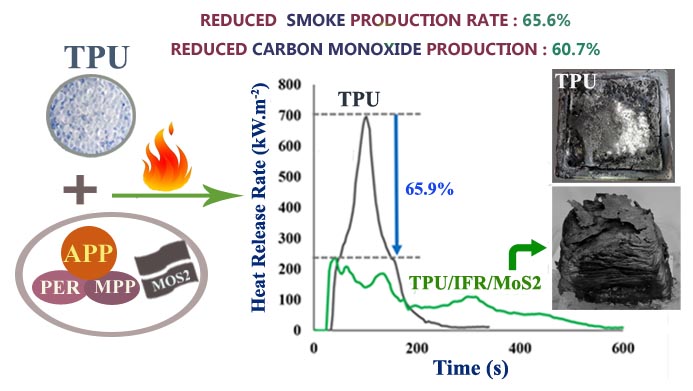
1. Molybdenum-disulfide (MoS2) as a two-dimensional flame retardant and smoke suppressant in combination with traditional intumescent flame retardants (APP/MPP/PER) improved the reaction to fire properties of TPU
2. Flammability test results and cone calorimeter data showed significant suppression of heat, smoke, and CO released in the TPU/IFR/MoS2 composite compared to the TPU
3. A high-quality char layer with a continuous and compact structure was formed during the combustion of the TPU/IFR/MoS2 composite
4. Thermal stability of TPU was improved by incorporating IFR/MoS2
Abstract
(20113 Views) |
Full-Text (PDF)
(8799 Downloads)
Abstract
(26900 Views) |
Full-Text (PDF)
(7078 Downloads)
|
Graphical Abstract
|
Reseach Highlights
Graphical Abstract:
Reseach Highlights:
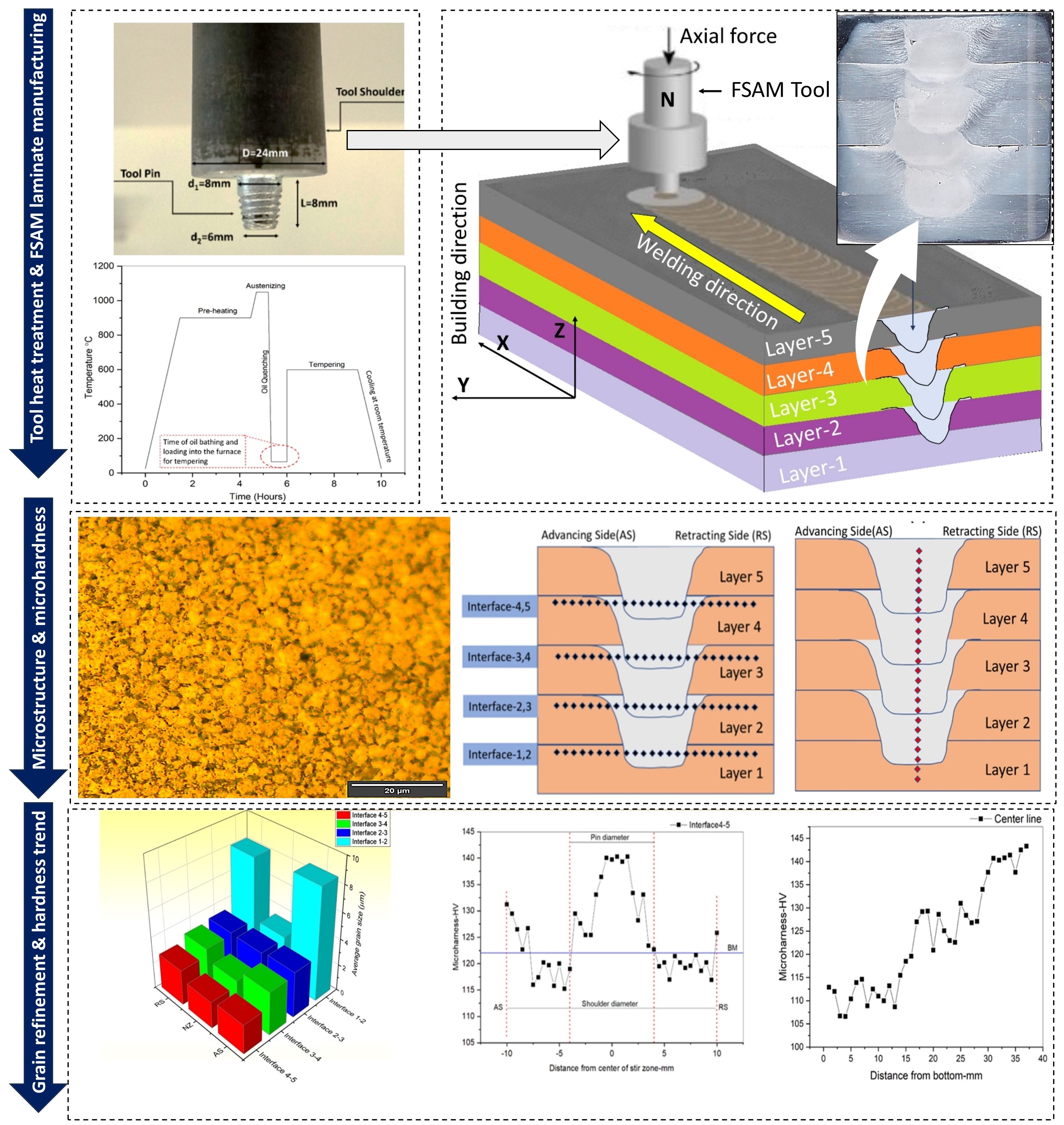
- A multi-layered AA 7075-T651 laminate developed through FSAM.
- Microstructure evolution and grain refinement were analyzed.
- Surface hardness investigated in the building and lateral direction within NZ.
- Achieved 143 HV peak hardness in the top layer with 2.0 μm equiaxed grains.
- Hardness forms a W-shape around NZ and increases linearly in the build direction.
Abstract
(26647 Views) |
Full-Text (PDF)
(7555 Downloads)
|
Graphical Abstract
Graphical Abstract:
Abstract
(23401 Views) |
Full-Text (PDF)
(8061 Downloads)
|
Graphical Abstract
|
Reseach Highlights
Graphical Abstract:
Reseach Highlights:
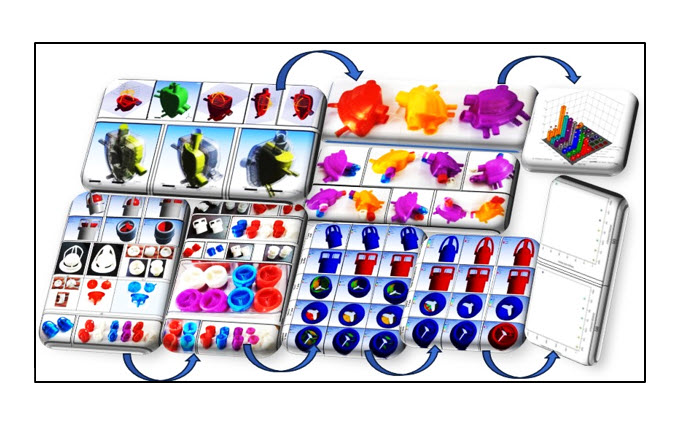
- In the present work, the development models of a new artificial human soft heart and artificial heart valves were designed, manufactured, and tested using nanocomposite materials and synthetics.
- The fabricated soft heart and the mechanical artificial heart valves were examined to determine the best service life for each type by using the transient repeated and continuously applied blood pressure to simulate diastolic and systolic that occur in the natural heart at each pulse cycle.
- The produced 3D printing of a new generation soft artificial heart for a permanent replacement was implemented as an alternative to the high-cost available temporary implant mechanical hearts, which may exceed the price by tens and hundreds of thousands of dollars, with a working life of not more than five years.
Abstract
(29783 Views) |
Full-Text (PDF)
(8511 Downloads)
|
Graphical Abstract
|
Reseach Highlights
Graphical Abstract:
Reseach Highlights:
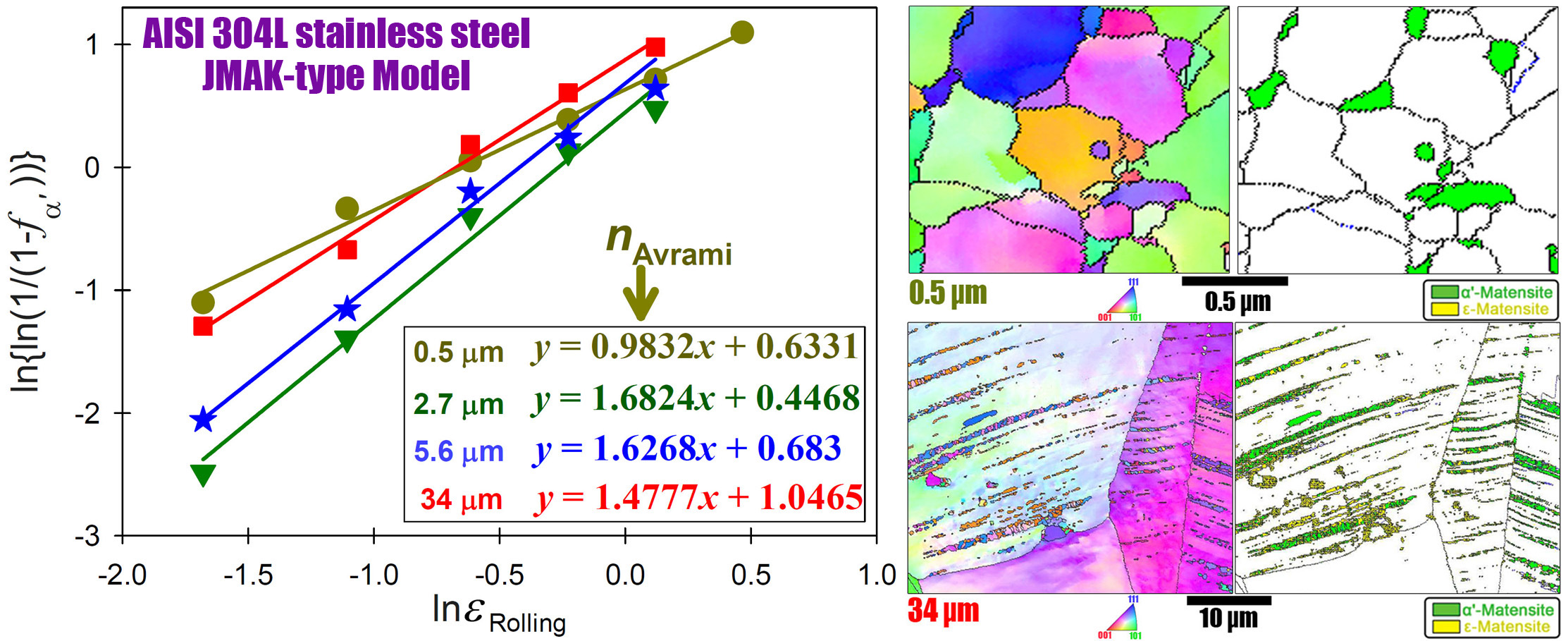
- By considering the dependency of α΄-martensite content on the strain, the JMAK-type model can be constructed
- JMAK-type model is a useful tool for predicting the nucleation sites and characterizing the transformation kinetics
JMAK-type analysis for the UFG sample resulted in an n value of ~1, but for coarse-grained samples, the value of ~1.6 was
Abstract
(21263 Views) |
Full-Text (PDF)
(7694 Downloads)
|
Graphical Abstract
|
Reseach Highlights
Graphical Abstract:
Reseach Highlights:
Highlights
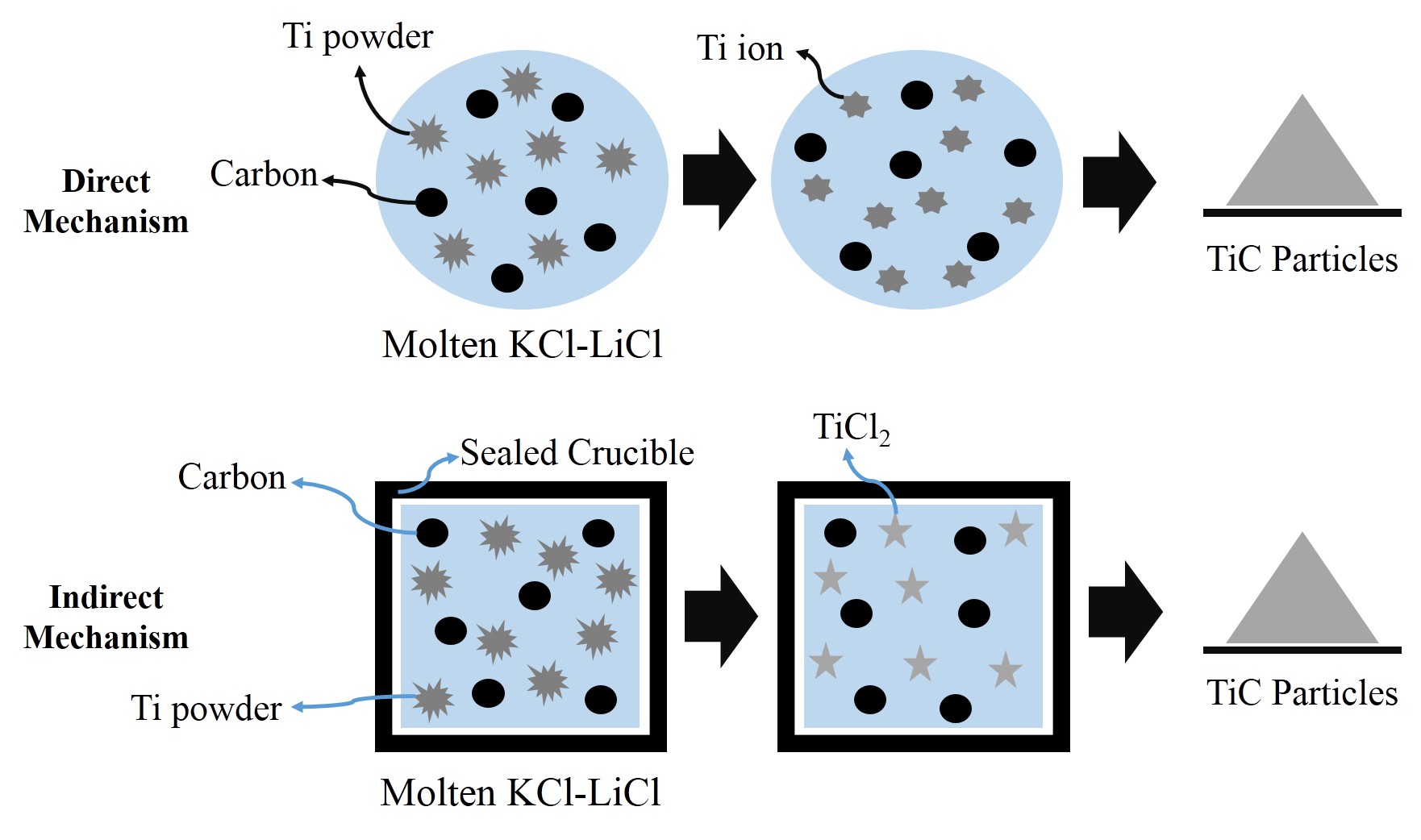
- KCl-LiCl eutectic composition molten salt accelerates Ti powders to Ti ionic species.
- Ti ions act a crucial role more than Ti in TiC synthesis.
- A duplex mechanism was proposed for TiC synthesis.
- In the primary mechanism Ti powders convert to Ti(II) and then reacts with carbon.
- In the secondary mechanism a reaction happens between Ti-chlorides and carbon to synthesize TiC.
Abstract
(24391 Views) |
Full-Text (PDF)
(8902 Downloads)
|
Graphical Abstract
|
Reseach Highlights
Graphical Abstract:
Reseach Highlights:
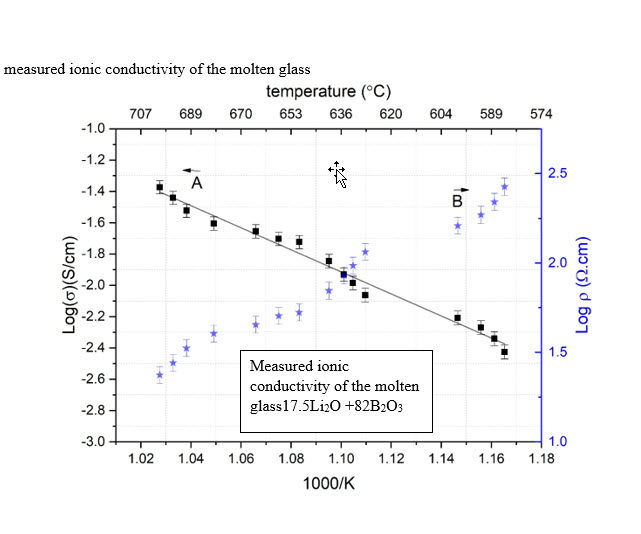
At high temperatures the conductivity and activation energy of the various anions in the molten samples were approximately the same. In the glassy-state, addition of LiI salt increases the conductivity more than LiCl.
Addition of both salts (LiCl & LiI) simultaneously is the best for the conduction.
Abstract
(21849 Views) |
Full-Text (PDF)
(7460 Downloads)
|
Graphical Abstract
|
Reseach Highlights
Graphical Abstract:
Reseach Highlights:
Highlights:
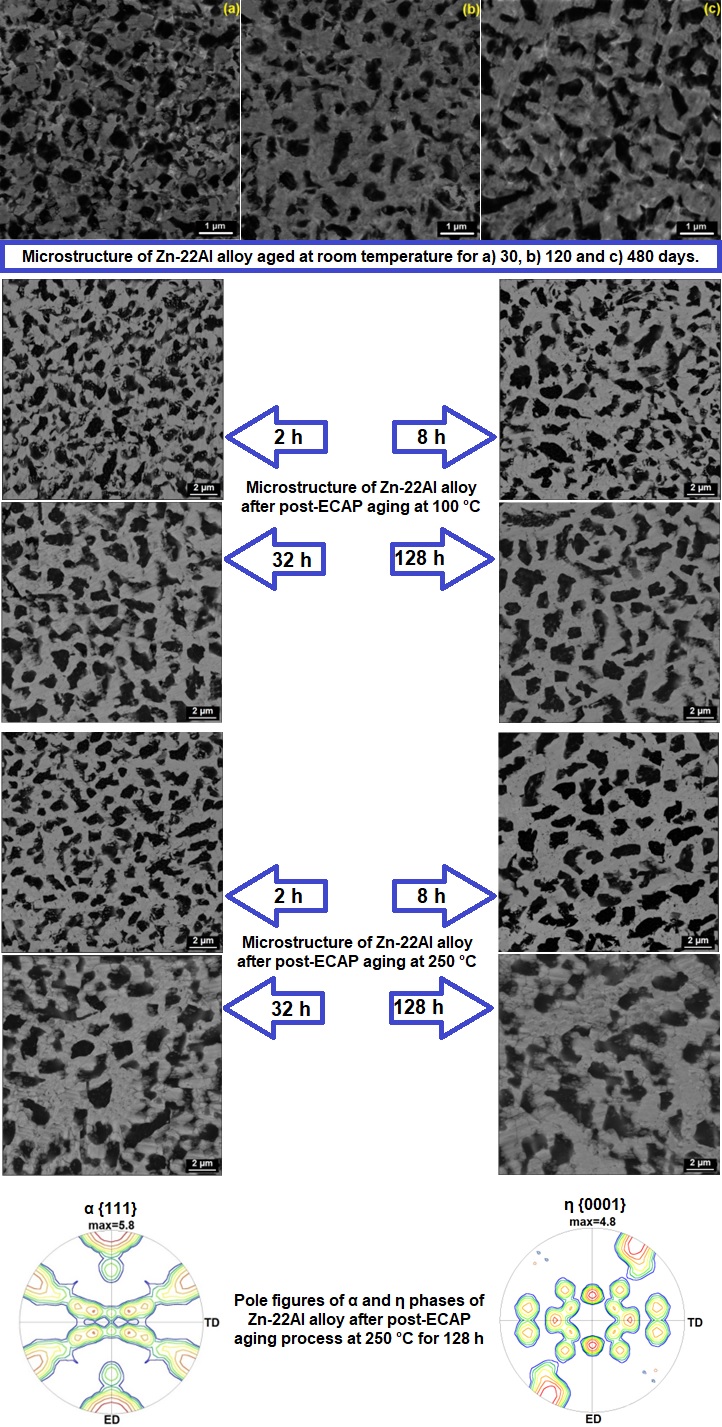
- The natural aging at room temperature after 8 passes of ECAP showed that the microstructure is not stable during isothermal storage. In the other words, the microstructure is quasi-stable at room temperature after ECAP process.
- It is necessary to mention that grain growth during storage at room temperature was limited due to the two-phase structure of the alloy that prevents each other from excessive growing.
- In the short time of artificial aging after 8 passes of ECAP, the grain growth rate is higher than in the long time of artificial aging.
- After 128 h of aging at 250 °C, the main texture of α phase was Copper {1 1 2} <1 1 1>. On the other hand, the components of P and Y were the main texture of η phase.
Export as:
HTML
|
XML
|
RSS


