Volume 19, Issue 4 (Desember 2022)
Abstract
(23229 Views) |
Full-Text (PDF)
(17620 Downloads)
|
Graphical Abstract
|
Reseach Highlights
Graphical Abstract:

Reseach Highlights:
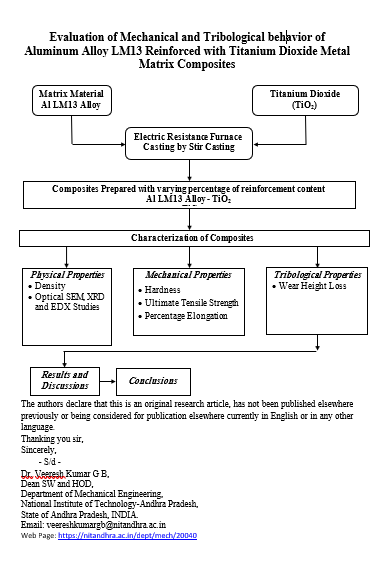
Evaluation of Mechanical and Tribological behavior of Aluminum Alloy LM13 Reinforced with Titanium Dioxide Metal Matrix Composites
Highlights of the Present Study
- The highlight of the present study is to fabricate Aluminum based particulate reinforced MMCs with 2 weight percentage of reinforcement content. The fabrication of composites has been done through liquid metallurgy route via stir casting technique.
- For the present studies Al LM13 is selected as matrix materials and TiO2 particulates were selected as reinforcement materials. The extent of incorporation of reinforcement material in the matrix alloy was varied 2wt%.
- Cylinders of cast composites were obtained. The test samples were prepared as per ASTM standards for different tests planned. The cast alloy and composites were subjected EDX, XRD, and SEM Studies,
- XRD, Energy Dispersive Spectroscopy and Scanning Electron Microscopy images were used to study Al LM13-TiO2 developed composites before & after the fracture and wear tests.
- The cast alloy and composites were subjected to evaluation of different properties such as Physical, Mechanical (Hardness, Strength, fracture and percentage elongation studies), and Wear Resistant properties.
- The wear tests were conducted using Pin-on-Disc wear testing machine in which cast alloys and composites are used as pin specimen which is under sliding contact with EN31 steel disc counter face material under different test conditions.
- The dry wear test results indicate that, the Al LM13-TiO2 MMCs offered higher wear resistance than that of matrix alloy. Increased loads and sliding distances in wear test resulted in higher wear loss.
- Additionally, TiO2 particulates contributed significantly in enlightening Al LM13-TiO2 MMCs wear resistance upto 1wt%.
- From the overall investigations and findings, it may be concluded that Al LM13-1wt% TiO2 exhibits significantly improved physical, mechanical, and tribological properties in comparison with the other Al LM13-1wt% TiO2 MMCs considered in the present study.
Thanking you sir,
- S/d -
Dr. Veeresh Kumar G B
Abstract
(23376 Views) |
Full-Text (PDF)
(8101 Downloads)
|
Graphical Abstract
|
Reseach Highlights
Graphical Abstract:

Reseach Highlights:
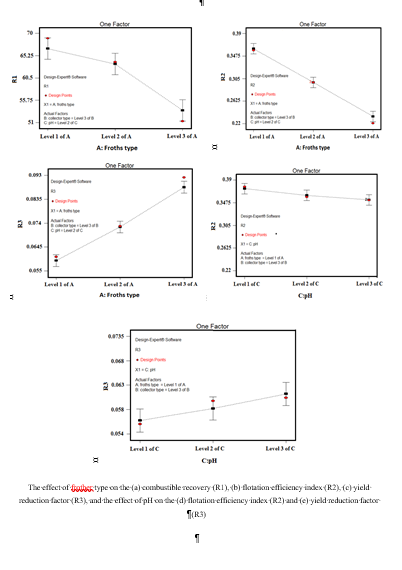
- The role of zero prewetting time was investigated on the rougher flotation recovery of coal tailings.
- Frother type and the interaction effect of frother type with collector type had the highest effective on the performance of flotation.
- The combustible recovery, yield reduction factor, and flotation efficiency index of coal obtained 67.79%, 0.056%, and 37% under optimal conditions, respectively.
- The FTIR analysis confirmed that less adsorption of gas oil collector occurred in the presence of SDS as frother.
Abstract
(25590 Views) |
Full-Text (PDF)
(15415 Downloads)
|
Graphical Abstract
|
Reseach Highlights
Graphical Abstract:

Reseach Highlights:
Highlights
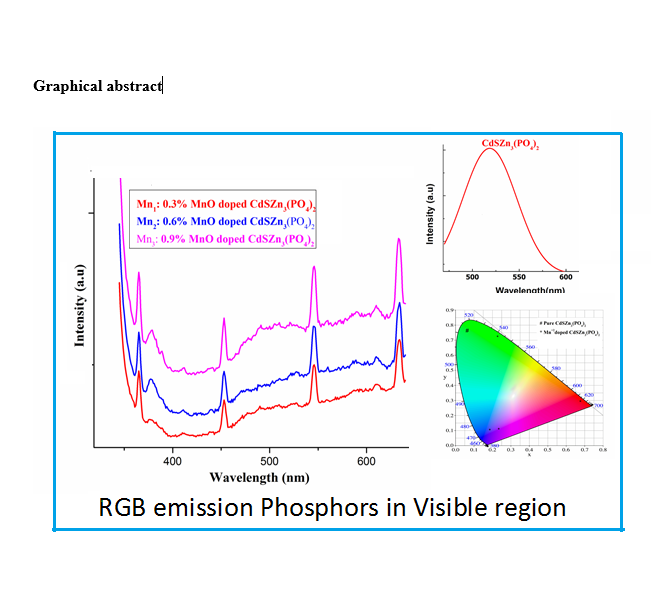
- Pure and Mn+2 doped CdSZn3(PO4)2 nanophosphorsprepared by hydrothermal method.
- With effect of Mn+2 phase change occur in Zn3(PO4)2 without disturbing CdS phase.
- SEM images shows rectangular flakes surrounded by hexagonal spheres.
- Energy bandgap decreases with increasing Mn+2 concentrations
- PL results shows strong RGB luminescence for solid-state lightening applications.
Abstract
(23489 Views) |
Full-Text (PDF)
(8372 Downloads)
|
Graphical Abstract
|
Reseach Highlights
Graphical Abstract:

Reseach Highlights:
Highlights
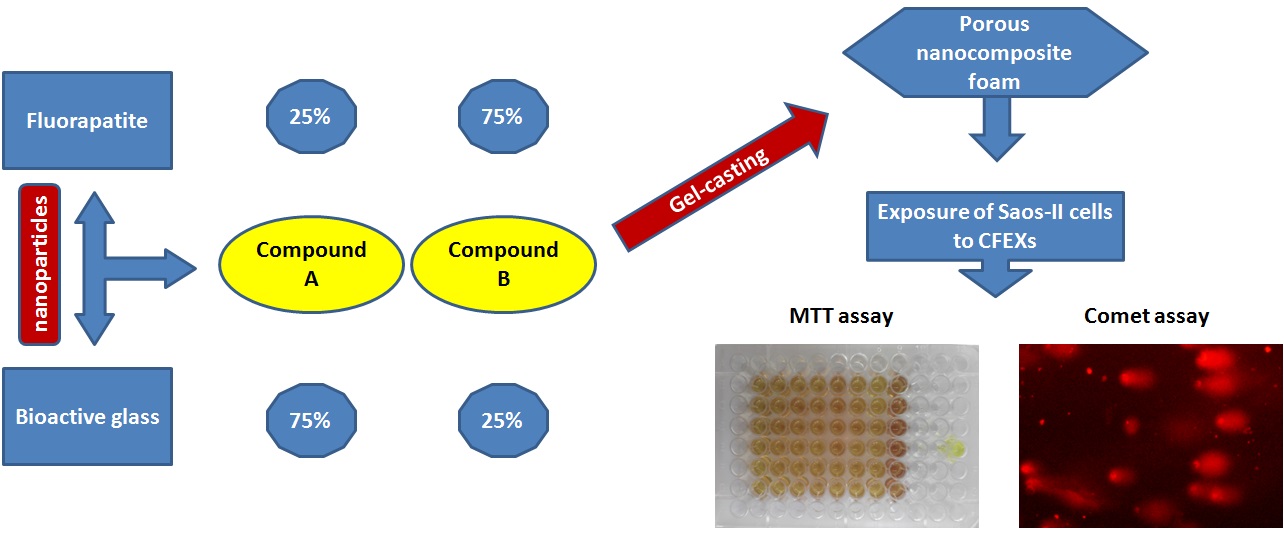
- Both studied composite foams could be considered as a non-toxic candidate for tissue engineering at concentrations <25%
- DNA damage increased with the increase of CFEXs concentration and exposure time
- The composite with equal FA/BG proportion has priority to examined compounds based on lower toxicity
Abstract
(23789 Views) |
Full-Text (PDF)
(8803 Downloads)
|
Graphical Abstract
|
Reseach Highlights
Graphical Abstract:

Reseach Highlights:
Highlights
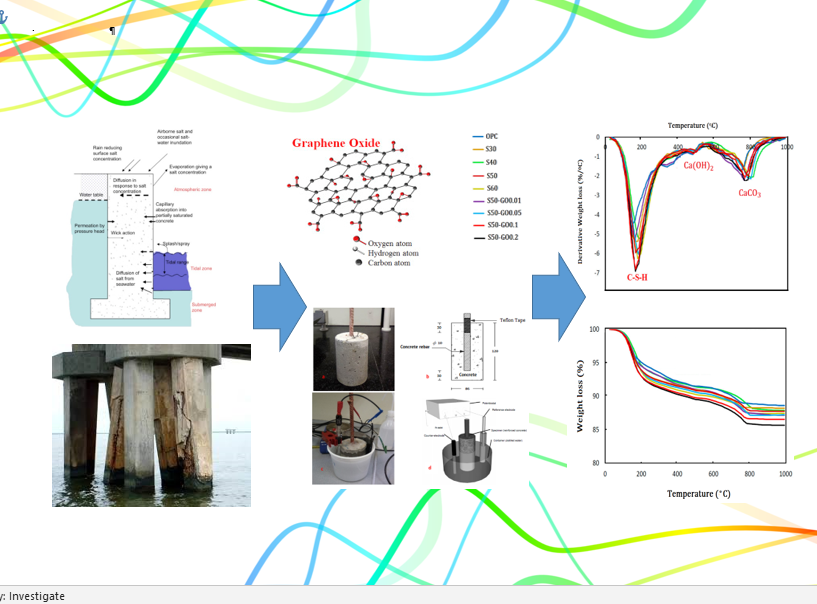
- Minute GO additions to GGBFS based concrete substantially enhance the resistance to chloride permeation.
- GGBFS improves the concrete resistance against chloride penetration.
- The addition of ground granulated blast furnace slag (GGBFS), improves mechanical strength.
- Graphene Oxide (GO), admixing to cement, expedites its hydration process.
Abstract
(27505 Views) |
Full-Text (PDF)
(15124 Downloads)
|
Graphical Abstract
|
Reseach Highlights
Graphical Abstract:

Reseach Highlights:
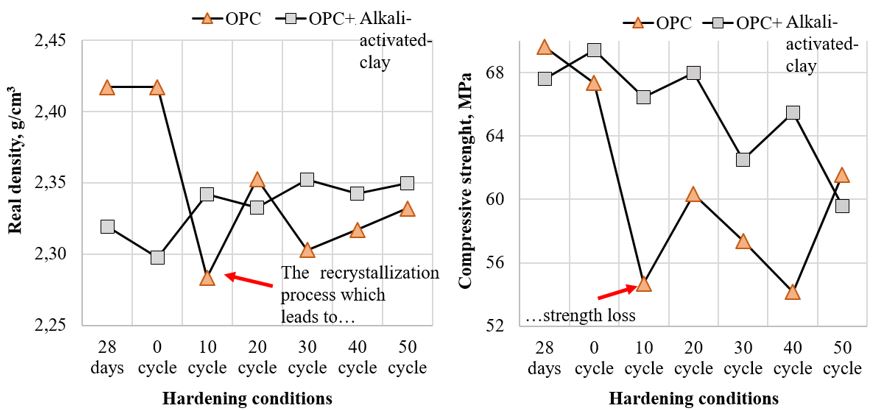
1. The NaOH solution allows to reduce the temperature of calcination of clays by 100-150℃
2. The pozzolan activity of thermally activated clays increases from 415 to 590 mg/g of the additive
3. Alkali-activated clays can significantly increase the strength of cement (by 1.5 times)
4. Cements with alkali-activated clays are able to resist freezing and thawing
Abstract
(22934 Views) |
Full-Text (PDF)
(8251 Downloads)
|
Graphical Abstract
|
Reseach Highlights
Graphical Abstract:

Reseach Highlights:
Highlights
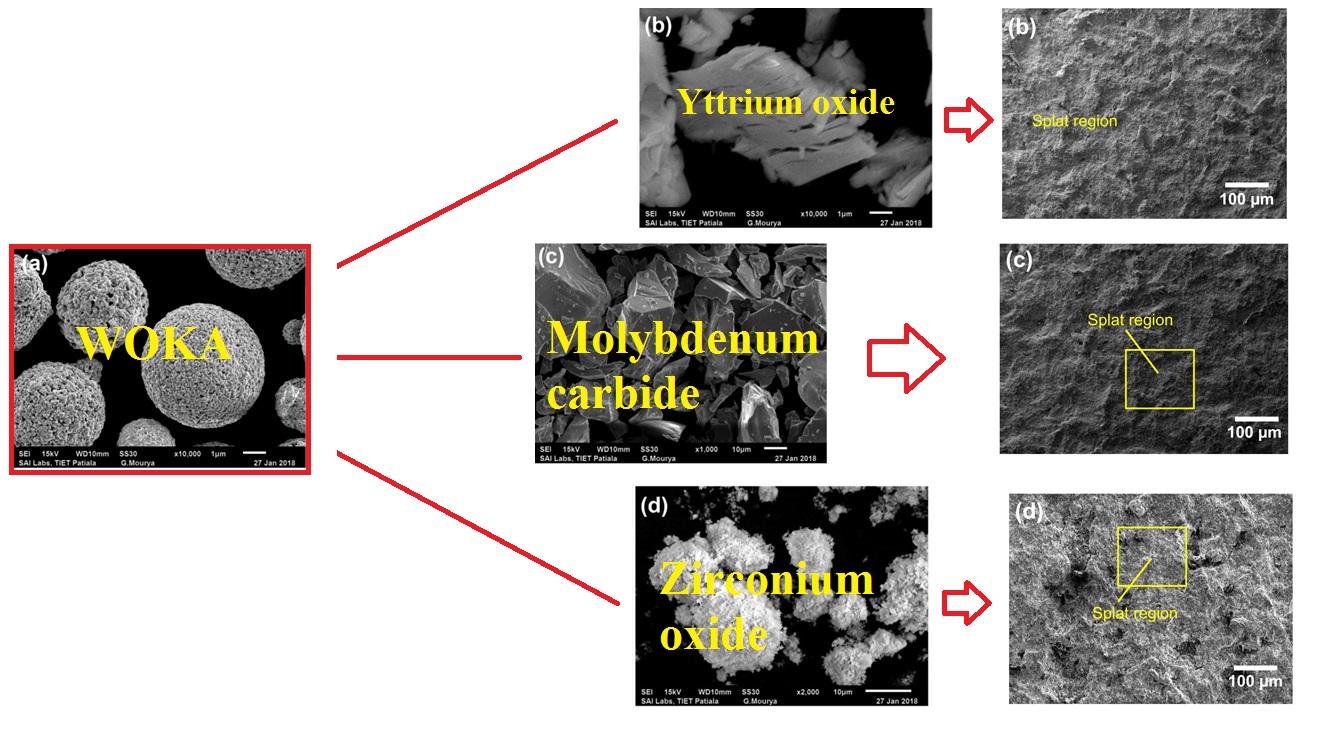
- The slurry erosion resistance order for the variation of concentration, time, and speed of rotation is found as WOKA-Y > WOKA-M > WOKA > WOKA-Z.
- Increment in slurry erosion was lower in the case of FA particles as compared to BA particles.
- Maximum slurry erosion for FA and BA slurry was perceived at 60º impact angle for standard and modified WOKA coatings.
- The characteristic of slurry erosion specifies that standard and modified WOKA coatings show brittle mode of failure.
Abstract
(22093 Views) |
Full-Text (PDF)
(8832 Downloads)
|
Graphical Abstract
|
Reseach Highlights
Graphical Abstract:

Reseach Highlights:
Highlights
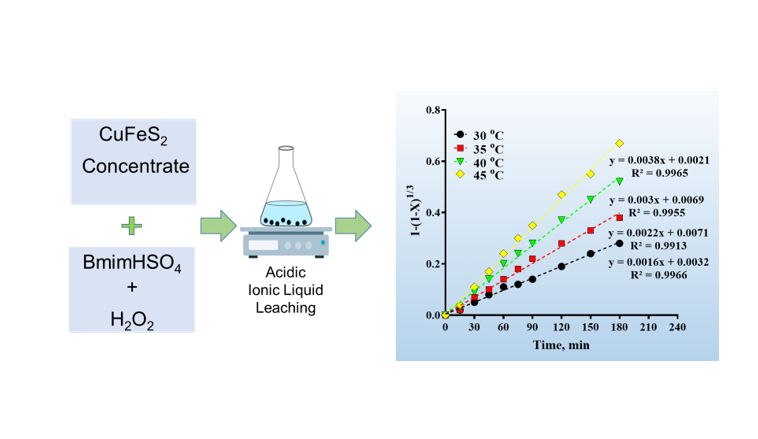
- Investigation of chalcopyrite leaching by 1-Butyl-3-methylimidazolium hydrogen sulfate (BmimHSO4) were performed.
- Best results were attained with 40% (w/v) BmimHSO4, 30 %v/v H2O2 and 45 °C for leaching time of 180 min.
- The copper extraction increased with increasing BmimHSO4, H2O2 and temperature.
The activation energy of CuFeS2 leaching process using BmimHSO4 was 46.63 kJ mol-1, which is chemical reaction controlled mechanism.
Abstract
(26509 Views) |
Full-Text (PDF)
(8651 Downloads)
|
Graphical Abstract
|
Reseach Highlights
Graphical Abstract:

Reseach Highlights:
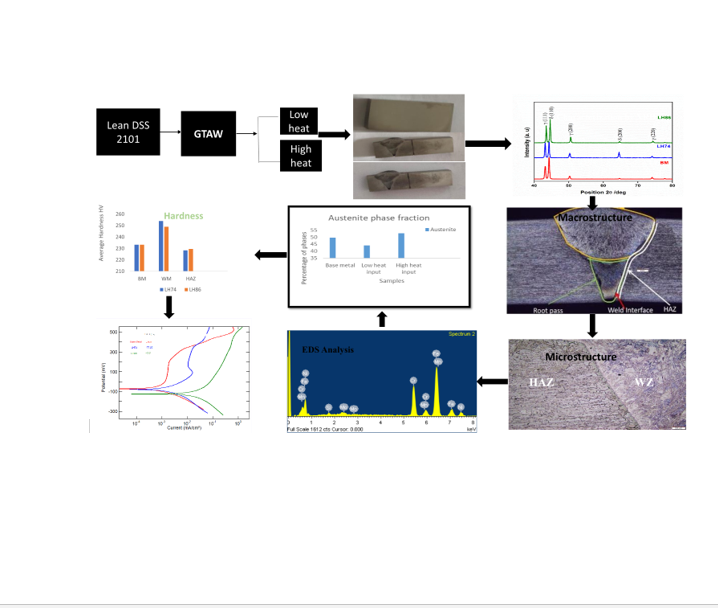
- Gas tungsten arc welding (GTAW) is performed on LDSS 2101 with different heat energy inputs.
- The effect of Heat input led to the significant microstructural evolution in weld metals with high austenite reformation.
- Important mechanical properties are investigated to understand the performance of weldments
- The polarization method is used to understand the corrosion behaviour of weldment in a 3.5% NaCl solution
Abstract
(25407 Views) |
Full-Text (PDF)
(14988 Downloads)
|
Graphical Abstract
|
Reseach Highlights
Graphical Abstract:

Reseach Highlights:
Highlights:
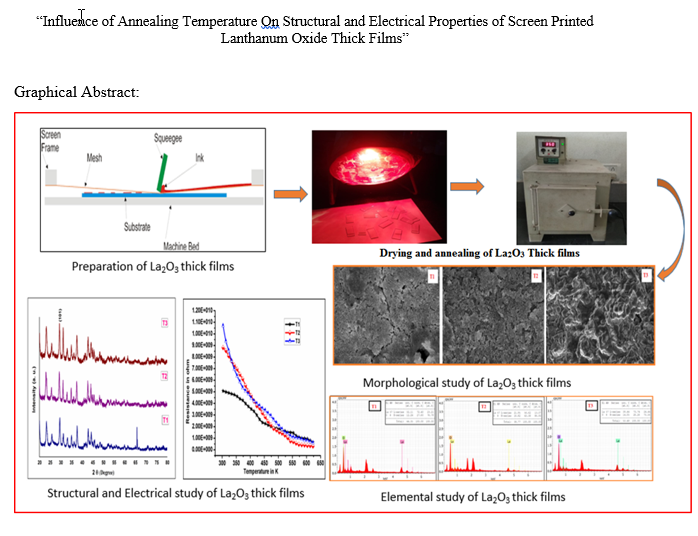
“Influence of Annealing Temperature On Structural and Electrical Properties of Screen Printed Lanthanum Oxide Thick Films”
Authors focus on below points:
- Prepared pure La2O3 thick films using standard screen printing technique.
- Studied the influence of annealing on electrical and structural properties of pure La2O3
- Reported new type of work on pure La2O3
- Future scope of the research lined with gas sensor on the basis of outcomes.
Abstract
(26640 Views) |
Full-Text (PDF)
(15563 Downloads)
|
Graphical Abstract
|
Reseach Highlights
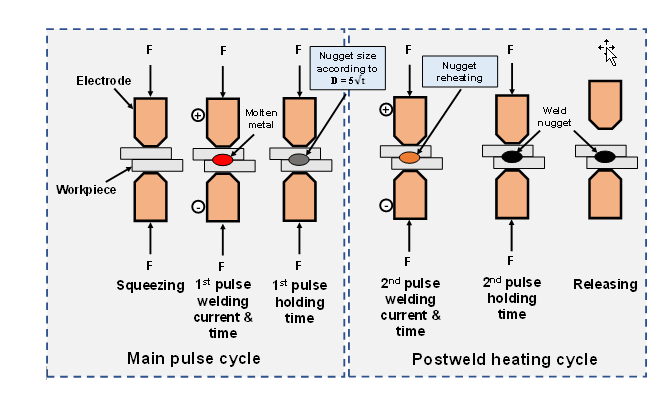
Graphical Abstract:

Reseach Highlights:
- Double RSW parameters are optimized to obtain maximum joint tensile shear strength
- Tempered martensite structure in FZ improved the joint tensile shear strength
- ANN and regression models are developed to predict tensile shear strength
Abstract
(39550 Views) |
Full-Text (PDF)
(8912 Downloads)
|
Graphical Abstract
|
Reseach Highlights
Graphical Abstract:

Reseach Highlights:
Highlights
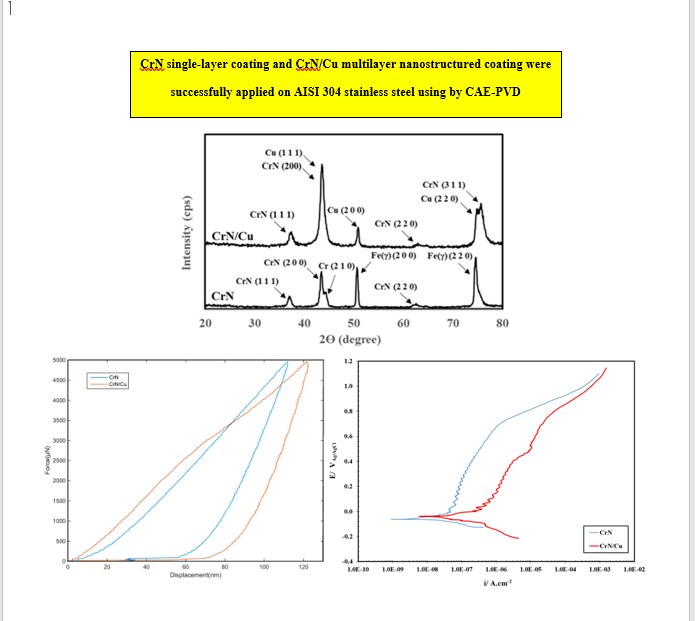
CrN single-layer coating and CrN/Cu multilayer nanostructured coating were successfully applied on AISI 304 stainless steel using by CAE-PVD.
SEM images showed that in both CrN and CrN/Cu coatings there are pinholes and macro-particles from melted cathode.
Nanoindentation test showed that hardness and elastic modulus of CrN and CrN/Cu coatings were 19.5 ± 2.1, 248 ± 18, 16.1 ± 0.84, and 287 ± 3 GPa.
Polarization resistance of both coatings in the Ringer solution was improved.
Antibacterial tests showed that both coatings have antibacterial behavior and CrN/Cu coating compared to CrN coating reduces the bacterial number even more after 3 h owing to the presence of Cu.
Abstract
(26694 Views) |
Full-Text (PDF)
(8585 Downloads)
|
Graphical Abstract
|
Reseach Highlights
Graphical Abstract:

Reseach Highlights:
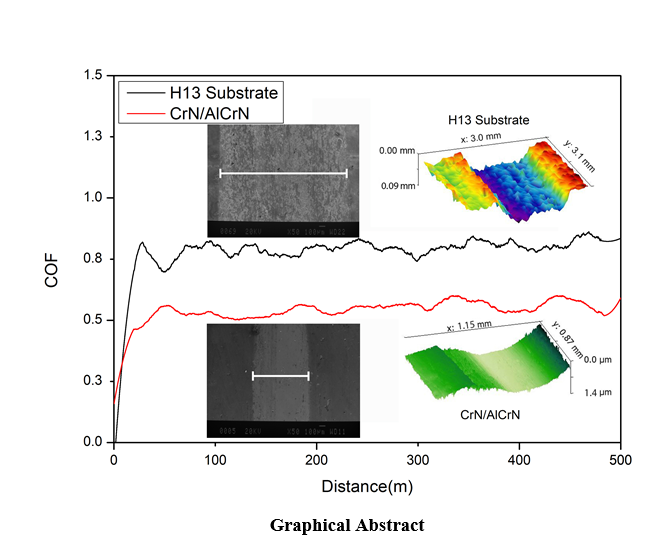
- The wear rate of the CrN/AlCrN multi-layer coating is more than 127 times lower than the one for the H13 substrate sample.
- The Hardness of the CrN/AlCrN multi-layer coating is almost 7 times harder than H13 steel substrate.
- The polarization resistance of the CrN/AlCrN multi-layer coating is almost 1.7 times higher than H13 substrate sample.
Export as:
HTML
|
XML
|
RSS